Nicotine

Last published: January 17, 2024
What is nicotine?
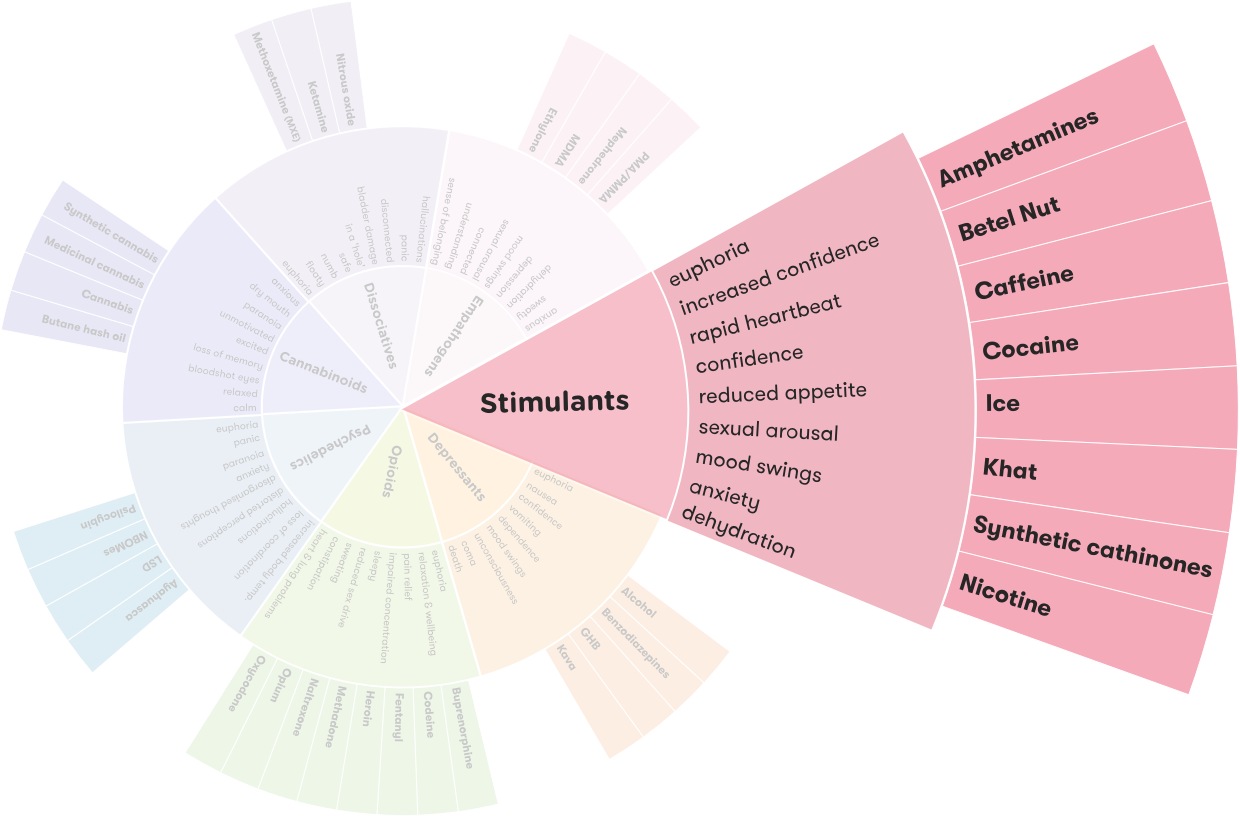
Nicotine is a stimulant drug that speeds up the messages travelling between the brain and body.1 It is the main psychoactive ingredient in tobacco products and so this Drug Facts page will focus on the effects of nicotine when consumed by using tobacco.
Tar and carbon monoxide (a toxic gas) are also released when tobacco is burned, such as when it’s smoked.1
Products such as cigarettes, cigars, pipe tobacco, chewing tobacco, and wet and dry snuff and the dried leaves from the tobacco plant all contain nicotine.1
Electronic cigarettes (also known as vapes) do not contain dried tobacco leaves, but they may still contain nicotine.
Street names for cigarettes
Ciggies, darts, durries, rollies, smokes, fags, butts, cancer sticks.
How is nicotine used?
Tobacco which contains nicotine is usually smoked in cigarettes. It is also smoked in cigars and pipes. There are numerous forms of smokeless tobacco including chewing tobacco, and wet and dry. Smokeless tobacco products are not available commercially in Australia.2
Other types of stimulants
Effects of nicotine
There is no safe level of drug use. Use of any drug always carries some risk. It’s important to be careful when taking any type of drug.
Nicotine affects everyone differently, based on:
- size, weight and health
- whether the person is used to taking it
- whether other drugs are taken around the same time
- the amount taken
- the strength of the tobacco and how much is contained in the product.
The following effects may be experienced among people who do not normally smoke tobacco products:
- dizziness
- headache
- nausea
- abdominal cramps
- possibly vomiting or weakness1
For people who smoke tobacco products regularly, they will build up a tolerance to the immediate short-term effects of smoking tobacco, and may experience the following effects after smoking:
- mild stimulation
- increase in heart rate
- increased ability to concentrate
- relaxation
- temporary reduction in the urge to smoke
- coughing
- dizziness, headaches
- bad breath
- tingling and numbness in fingers and toes
- reduced appetite, stomach cramps and vomiting.1,3
If a large amount of nicotine is taken the following effects may also be experienced:
- confusion
- feeling faint
- seizures
- fast breathing
- respiratory arrest (stop breathing) and death.1
Some people believe that smoking ‘light’ or ‘low tar’ cigarettes is less harmful than regular cigarettes. However, there is little difference between the amount of chemicals inhaled by people who smoke ‘light’ cigarettes and those who smoke regular ones.4
Long-term effects
Regular smoking of tobacco products which contain nicotine have well documented negative effects on health and is recognised as a major preventable cause of premature death and disability around the world.1, 5 Use of nicotine through smoking may eventually cause the following types of chronic disease and issues:
- stroke
- blindness, cataracts (eye diseases)
- birth defects if the fetus is exposed to cigarettes
- periodontitis (yellowing teeth, gum disease)
- aortic aneurism (enlarging of major blood vessels)
- coronary heart disease
- pneumonia
- various respiratory diseases (shortness of breath, asthma, coughing fits)
- diabetes
- reduced fertility
- ectopic pregnancy (in the fallopian tube)
- hip fractures
- male sexual dysfunction
- rheumatoid arthritis
- reduced immune function (regular colds and flu)
- overall diminished health (ageing, back pain, slower healing wounds, mood swings)
- dependence on smoking
- financial, work and social problems.5
Smoking cigarettes containing nicotine are causally linked to the following cancers (i.e. smoking may directly cause these cancers)
- oropharynx
- larynx
- oesophagus
- trachea, bronchus and lung
- acute myeloid leukemia
- stomach
- liver
- pancreas
- kidney and ureter
- cervix
- bladder
- colorectal.5
Passive smoking
Passive smoking is when someone breathes in smoke from other people smoking. Passive smoking can cause many of the health problems listed above, so it’s important not to smoke near other people, particularly babies, children, pregnant and breastfeeding women, and people with chronic respiratory conditions.6
Using nicotine with other drugs
The effects of using nicotine with other drugs – including over-the-counter or prescribed medications – can be unpredictable and could cause:
- Nicotine + benzodiazepines: reduced effectiveness of benzodiazepines.
- Nicotine + contraceptive pill: increased risk of blood clots forming.7
- Smoking tobacco appears to increase the amount of Warfarin (a prescribed medication) required to be effective.8
It’s important to check with a medical professional about whether nicotine might affect any medications you are taking.
Withdrawal
Giving up nicotine after using it for a long time is challenging because the body has to get used to functioning without it. Withdrawal symptoms usually start within 2–3 hours after you last use tobacco. The symptoms may last from a few days to a few weeks. These symptoms can include:
- cravings
- irritability, anxiety and depression
- restless sleep
- eating more and putting on weight
- trouble concentrating
- headaches
- coughing and sore throat
- aches and pains
- upset stomach and bowels.9
You may still crave a cigarette for months and years after giving up. It’s important to ask for help if you need it. Call Quitline on 13 QUIT (13 78 48).
Federal and state laws make it an offence to sell or supply tobacco products to people under 18 years of age. It is also illegal for anyone under 18 years to purchase tobacco products.10
There are laws that regulate and restrict how tobacco products are advertised, promoted and packaged.10
There are also laws and regulations that restrict smoking in public areas such as shopping centres, cafes and workplaces. Most states and territories have laws that ban smoking in cars with children.10
See also, drugs and the law.
National
- Tobacco smoking is the leading cause of preventable burden in Australia
- In 2020-21, one in ten adults were current daily smokers (10,7% or 2.1 million adults).
- Men were more likely than women to smoke daily (12.6% compared to 8.8%).
- 98% of 15-17 year olds reported that they were currently non-smokers.
- Adults living in outer regional and remote Australia were almost twice as likely to be current daily smokers compared with those living in major cities (17.9% and 9.3%)11
Young people
- Young Australians (aged 14–24) have their first full cigarette at 16.63 years on average.12
- In 2017, 82% of all secondary students in Australia had never smoked.13
- 2.07% of all 12-17 years old have smoked more than 100 cigarettes in their lifetime, which peaks at 7.96.0% among 17 year olds.13
- Brands B, Sproule B, Marshman J. Drugs and Drug Abuse. 3 ed. Toronto: Addiction Research Foundation; 1998.
- Geenhalgh EM, Gartner C, Scollo MM. InDepth 18A: Forms of smokeless tobacco and how they are regulated Melbourne: Cancer Council Victoria; 2016 [cited 2020 March 11,].
- D C. Acute effects of nicotine on the body Melbourne: Cancer Council Victoria; 2018 [cited 2020 March 11].
- Bellew B, Greenhalgh EM, Winstanley MH. Health effects of brands of tobacco products which claim or imply, delivery of lower levels of tar, nicotine and carbon monoxide Melbourne: Cancer Council Victoria; 2020 [cited 2020 March 11,].
- Winstanley MH, Greenhalgh EM. Introduction: the health effects of active smoking Melbourne: Cancer Council Victoria; 2019 [cited 2020 March 11,].
- Campbell MA, Greenhalgh EM, Ford C, Winstanley MH. Estimates of morbidity and mortality attributable to secondhand smoke Melbourne: Cancer Council Victoria; 2019 [cited 2020 March 11, ].
- Lucas C, Martin J. Smoking and drug interactions. Australian Prescriber. 2013;36(3):102-4.
- Nathisuwan S, Dilokthornsakul P, Chaiyakunapruk N, Morarai T YT, Piriyachananusorn N. Assessing evidence of interaction between smoking and warfarin: a systematic review and meta-analysis. Chest 2011;139(5).
- Quitline. What is nicotine withdrawal? Australia: Quitline; 2020 [cited 2020 March 11].
- Australian Government Department of Health. Smoking and tobacco laws in Australia Australia: Australian Government; 2020 [cited 2020 March 11,].
- Australian Bureau of Statistics. Pandemic insights into Australian smokers, 2020-212021 [cited: 16.11.2022].
- Australian Institute of Health and Welfare. National Drug Strategy Household Survey 2019 2020 [cited: September 2022].
- Guerin N & White V. ASSAD 2017 Statistics & Trends: Trends in Substance Use Among Australian Secondary Students.; 2020.
Explore stimulants on the Drug Wheel