Cocaine
Last published: November 23, 2023
What is cocaine?
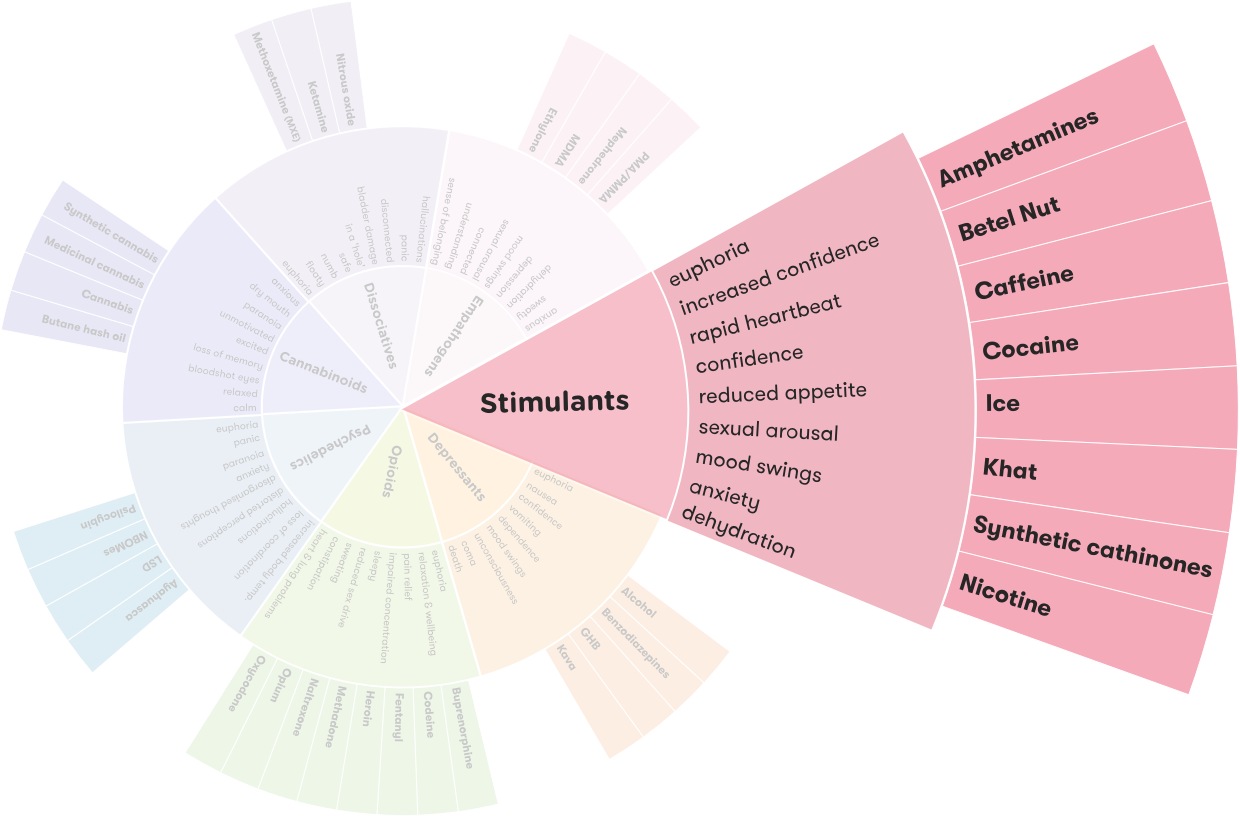
Cocaine is a stimulant drug. They speed up messages travelling between the brain and body.
Cocaine comes from the leaves of the coca bush (Erythroxylum coca), native to South America.1 The leaf extract is processed to produce three different forms of cocaine:
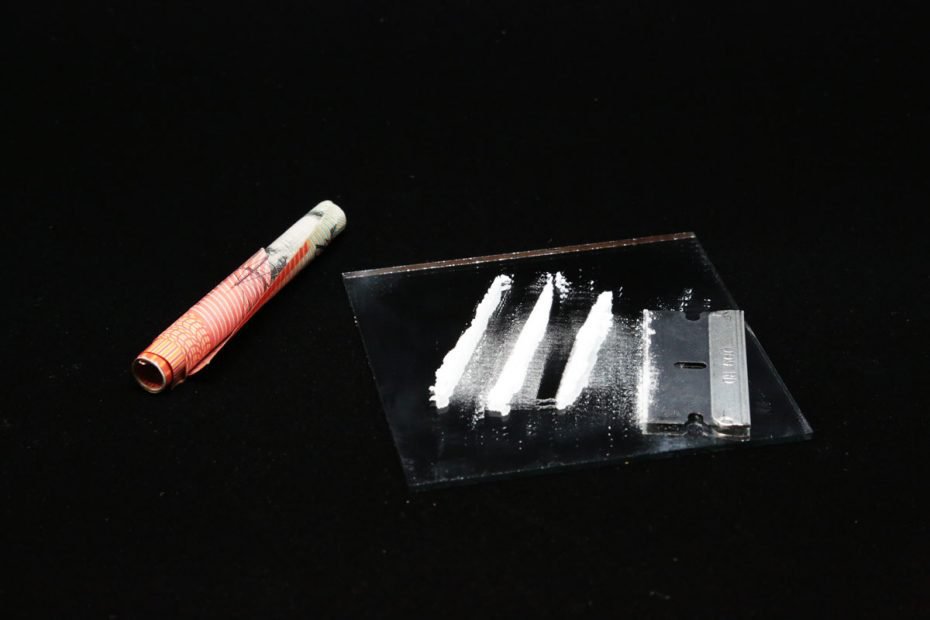
- Cocaine hydrochloride: a fine white powder with a bitter, numbing taste.2 Cocaine hydrochloride is often mixed, or ‘cut’, with other substances such as lidocaine, talcum powder or sugar to dilute it before being sold.2
- Freebase: a white powder that is purer than cocaine hydrochloride.3
- Crack: crystals ranging from white or cream to transparent with a pink or yellow hue. It may contain impurities.3
Other names
C, coke, crack, nose candy, snow, white lady, toot, Charlie, blow, white dust or stardust.
Other types of stimulants
How is cocaine used?
Cocaine hydrochloride is most commonly snorted.4 It can also be injected and rubbed into the gums.2 If cocaine is snorted, the effects can be felt in approximately 1-10 minutes and last for around 90 minutes.
Freebase and crack cocaine are usually smoked.2,3
Indigenous people of South America have traditionally chewed the leaves of the coca bush for their stimulant and appetite suppressant effects.1,2
Effects of cocaine
There is no safe level of drug use. Use of any drug always carries some risk. It’s important to be careful when taking any type of drug.
Cocaine affects everyone differently, based on:
- size, weight and health
- whether the person is used to taking it
- whether other drugs are taken around the same time
- the amount taken
- the strength of the drug (varies from batch to batch).
You may experience:
- happiness and confidence
- talking more
- feeling energetic and alert
- anxiety
- paranoia
- irritability and agitation
- headaches
- dizziness
- feeling physically strong and mentally sharp
- reduced appetite
- dry mouth
- enlarged (dilated) pupils
- higher blood pressure and faster heartbeat and breathing
- higher body temperature
- increased sex drive
- insomnia
- unpredictable, violent or aggressive behaviour
- indifference to pain.4
Overdose
If you take a large amount or have a strong batch, you could overdose. Call an ambulance straight away by dialling triple zero (000) if you or someone else has any of these symptoms (ambulance officers don’t need to involve the police):
- nausea and vomiting
- extreme anxiety
- chest pain
- panic
- extreme agitation and paranoia
- hallucinations
- tremors
- breathing irregularities
- kidney failure
- seizures
- stroke
- heart problems.2,8
High doses and frequent heavy use can also cause ‘cocaine psychosis’, characterised by paranoia, hallucinations, unusual thoughts and out of character/behaviour.4 These symptoms usually disappear a few days or weeks after the person stops using cocaine.4
Injecting cocaine can increase the risk of:
- overdose
- tetanus
- infection
- vein damage.
Sharing needles increases the risk of:
- hepatitis B
- hepatitis C
- HIV/AIDS.
Coming down
In the days after cocaine use, you may feel:
- irritability and paranoia
- mood swings
- feeling uncomfortable
- exhaustion.4
Long-term effects
Regular use of cocaine may eventually cause:
- dependence
- lung conditions such as bronchitis
- anxiety, paranoia and psychosis
- sexual dysfunction
- kidney failure
- stroke
- seizures
- hypertension and irregular heartbeat
- heart disease and death.4, 5
Snorting cocaine regularly can also cause:
- runny nose and nose bleeds
- nose infection
- damage to the tissue separating the nostrils (nasal septum)
- loss of sense of smell.4
Withdrawal
Giving up cocaine after a long time is challenging because the body has to get used to functioning without it. Please seek advice from a health professional.
Phases of withdrawal
Withdrawal symptoms usually start around 6-12 hours after the last use.
Withdrawal usually happens in three phases:
- Crash – feelings of depression or anxiety, cocaine cravings, extreme tiredness (experienced in the first few days)
- Withdrawal – cocaine cravings, lack of energy, anxiety, agitation, disturbed sleep,and an inability to feel pleasure (can last for several weeks)
- Extinction – withdrawal symptoms can occur over several months, gradually subsiding).4
Mixing cocaine with other drugs
Mixing cocaine with other drugs can have unpredictable effects and increase the risk of harm.
- Cocaine and psilocybin/LSD/cannabis: can intensify anxiety, paranoia, confusion, or thought loops.
- Cocaine and opioids/GHB/GBL: can increase the risk of heart strain and respiratory arrest.
- Cocaine and methamphetamine: can increase the risk of heart strain.
- Cocaine and ketamine: can impair thinking, coordination and increase blood pressure depending on amount taken.
- Cocaine and alcohol: can feel less intoxicated due to the stimulant effect of cocaine and lead to drinking more.
- Cocaine and MDMA: increases the risk of heart strain, heart attack and psychosis. Cocaine can also reduce desirable effects of MDMA.
‘Polydrug use’ is a term for the use of more than one drug or type of drug at the same time or one after another.6 Polydrug use can involve both illicit drugs and legal substances, such as alcohol and medications.
Reducing harm
There are ways in which you can reduce the risks associated with using cocaine:
- If snorting crush to a fine powder as crystals can cause cuts.
- To protect your nose, rinse with water before and after.
- To reduce the transmission of viruses like HIV or Hep C, avoid using money notes instead use your own straw or a disposable one.
- Regularly snorting cocaine can damage your nose, it’s a good idea to switch nostrils or have a break.
- Try to eat regularly even if you are not hungry. Eat fresh healthy food such as fruit and vegetables that are high in vitamins and nutrients.
- Try to rest and get sleep.
- Stay hydrated. People can become dehydrated when using cocaine, take small sips of water regularly.
- Regular use of cocaine can increase the risk of heart attack or other heart problems. Using less frequently and smaller amounts may reduce this risk. 7,8
Getting help
If your use of cocaine is affecting your health, family, relationships, work, school, financial or other life situations, or you’re concerned about a loved one, you can find help and support.
Call the National Alcohol and Other Drug Hotline on 1800 250 015 for free and confidential advice, information and counselling about alcohol and other drugs
Help and Support Services search
Find a service in your local area from our list. Simply add your location or postcode and filter by service type to quickly discover help near you.
If you're looking for other information or support options, send us an email at druginfo@adf.org.au
Path2Help
Not sure what you are looking for? Try our intuitive Path2Help tool and be matched with support information and services tailored to you.
Find out more
Federal and state laws provide penalties for possessing, using, making or selling cocaine, or driving under their influence.
See also, drugs and the law.
National
- 11.2% of Australians aged 14 years and over have used cocaine one or more times in their life.9
- 4.2% of Australians aged 14 years and over have used cocaine in the previous 12 months.9
Young people
- Young Australians (aged 14–24) first try cocaine at 23.6 years on average.9
- Among the 2% of 12-17 year olds who used cocaine in the past year, 45% of males and 66% of females only used it once or twice.10
- Bucello C, Degenhardt L, Calabria B, Nelson P, Roberts A, Medina-Mora M, et al. What do we know about the extent of cocaine use and dependence? Results of a global systematic review. Sydney: National Drug and Alcohol Research Centre University of New South Wales; 2010.
- Akwe J. Pulmonary effects of cocaine use. J Lung Pulm Respir Res. 2017;4(2):00121.
- Brands B, Sproule, B, Marshman, J. Drugs & Drug Abuse Third ed. Ontario: Addiction Research Foundation; 1998.
- Black E. Cocaine: What you need to know. National Drug and Alcohol Research Centre; 2014.
- Morentin B, Ballesteros J, Callado LF, Meana JJ. Recent cocaine use is a significant risk factor for sudden cardiovascular death in 15–49-year-old subjects: a forensic case–control study. Addiction. 2014;109(12):2071-8.
- Nutt D. Drugs without the hot air : making sense of legal and illegal drugs. Cambridge: UIT Cambridge Ltd; 2012.
- Harm Reduction Victoria. Cocaine n.d. [cited: 30.03.2023].
- Psychonaut Wiki. Cocaine 2022 [cited: 30.03.2023].
- Australian Institute of Health and Welfare. National Drug Strategy Household Survey 2019. Canberra: AIHW; 2020.
- Guerin N, & White, V. ASSAD 2017 Statistics & Trends: Australian Secondary Students’ Use of Tobacco, Alcohol, Over-the-counter Drugs, and Illicit Substances. Second Edition.: Cancer Council Victoria; 2020.
Explore stimulants on the Drug Wheel