Cannabis
Last published: November 22, 2023
What is cannabis?
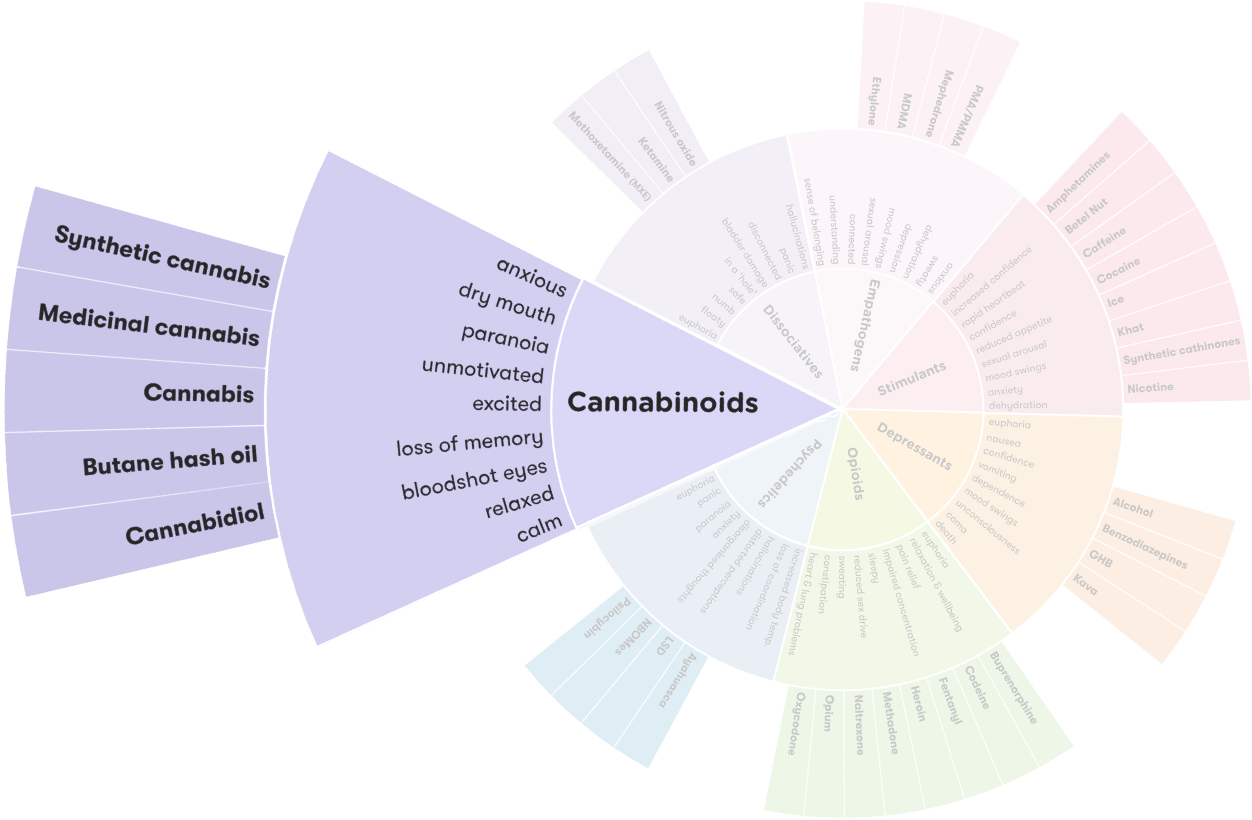
Cannabis is a cannabinoid drug. The number of different cannabinoids in the cannabis sativa plant is still being researched, but it primarily contains the psychoactive cannabinoid THC (delta9 tetrahydrocannabinol) and the non-psychoactive cannabidiol (CBD).1 It’s also commonly known as marijuana.
Other names
Marijuana, yarndi, pot, weed, hash, dope, gunja, joint, stick, chronic, cone, choof, mull, 420, dabs, dabbing, BHO.
Other types of cannabinoids
How is it used?
Cannabis can be smoked, eaten or vaporised and comes in different forms. Users report that the subjective effects of cannabis vary significantly depending on the form consumed.2
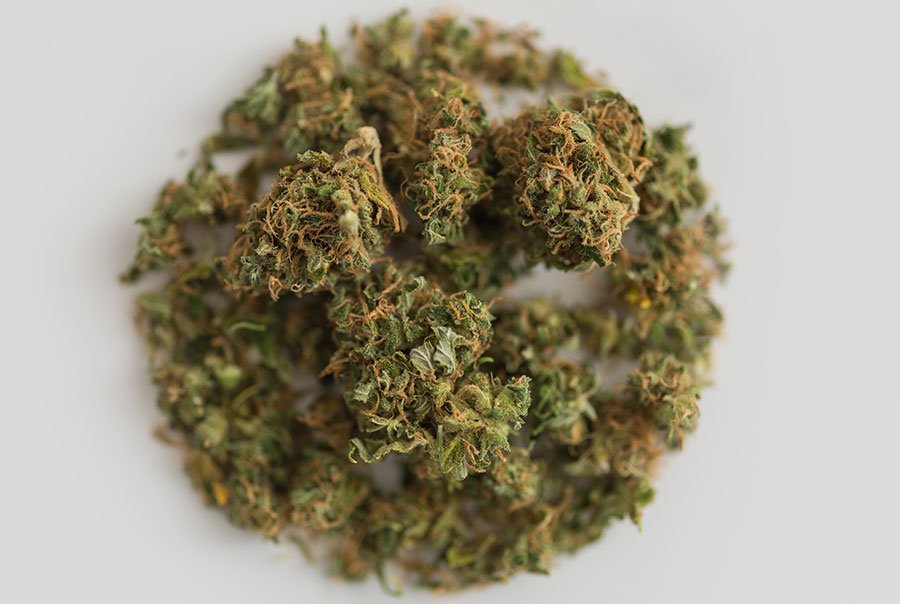
- Marijuana − the dried leaves and flowers (buds) of the cannabis plant that are smoked in a joint or a bong. This is the most common form.
- Hashish – the dried plant resin that is usually mixed with tobacco and smoked or added to foods and baked goods; such as cookies and brownies.
- Hash oil – liquid that is used sparingly (due to high potency) and added to the tip of a joint or cigarette and smoked.3
- Concentrates – extracts (dabs, wax or shatter) typically using butane hash oil as a solvent, often vaporised in small quantities due to high THC content.3
Cannabis can be put into various foods generally called ‘edibles’. It usually takes between one to three hours to feel its effects.4 Impatient or naïve users might think they have not taken enough to feel the effects, and if they consume more they may experience unpleasantly strong psychoactive effects. When edible products have inconsistent levels of THC, even experienced users may find it difficult to control the amount consumed.5
When smoked or vaporised, the effects are usually felt straight away.6 There are health concerns about the impact of smoking cannabis, especially in the long term. This is particularly the case if mixed with tobacco.
Cannabis can also come in synthetic form, which may be more harmful than real cannabis.
Effects of cannabis
There is no safe level of drug use. Use of any drug always carries some risk. It’s important to be careful when taking any type of drug.
Cannabis affects every individual differently. Even the same person may have a different experience on separate occasions or over their lifetime.
Some people report feelings of relaxation and euphoria while others report anxiety and paranoia.7 Some factors that might influence these differences could be:
- size, weight and health
- whether the person is used to taking it
- whether other drugs are taken around the same time
- the amount taken
- the strength of the drug
- expectations of consuming cannabis
- the environment of the individual
- the individual’s personality.6, 7
The effects of cannabis might include:
- feelings of relaxation and euphoria
- spontaneous laughter and excitement
- increased sociability
- increased appetite
- dry mouth. 6, 7
If a large amount, strong batch, or concentrated form is consumed, you may be more likely to also experience:
- memory impairment
- slower reflexes
- bloodshot eyes
- increased heart rate
- anxiety and paranoia.6, 7
Long-term effects
Long-term effects depend on how much, how often and how the cannabis is consumed (e.g. vaporising a concentrate versus smoking the flower).8 Its heavy, regular use could potentially lead to:
- tolerance to the effects of cannabis
- dependence on cannabis
- reduced cognitive functioning.8, 9
Smoking cannabis may also increase the likelihood of experiencing:
- sore throat
- asthma
- bronchitis
- if smoked with tobacco, cancer.10
Individuals with a family history of serious mental illnesses such as schizophrenia or bipolar disorder – or who currently experience symptoms of these conditions – should avoid using cannabis.11, 12
Cannabis use may worsen the course of bipolar disorder, and those who are predisposed to experiencing psychosis (a common symptom of schizophrenia), may be at an increased risk of cannabis-induced psychosis.11, 12 Psychosis symptoms include delusions, hallucinations and seeing or hearing things that do not exist or are distorted.
Mixing cannabis with other drugs
Mixing cannabis with other drugs can have unpredictable effects and increase the risk of harm. Cannabis and MDMA/ nangs (nitrous oxide): can intensify the effects which can cause confusion, anxiety or paranoia.
Cannabis and alcohol: can cause nausea, impaired coordination, vomiting.
Cannabis and cocaine: can lead to anxiety, paranoia, confusion, and thought loops.13
Reducing harm
There are ways in which you can reduce the risks associated with using cannabis:
- Avoid regular use to reduce the negative effects cannabis can have on the brain and body.
- Consider using edibles or oils instead of smoking.
- Avoid tobacco as mixing agent.
- Keep bongs and pipes clean, avoid plastic bottles due to toxic fumes.
- Consider a vaporizer which stops combustion and reduces tar and carcinogens.
- Avoid operating machinery, driving or swimming.
- Try to avoid inhaling too deeply or holding your breath.
- Avoid synthetic cannabinoid products such as K2 or Spice.14
Cannabis is sometimes used to help with the ‘come down’ effects of stimulant drugs, such as ice, speed and ecstasy.
'Polydrug use’ is a term for the use of more than one drug or type of drug at the same time or one after another. Polydrug use can involve both illicit drugs and legal substances, such as alcohol and medications.
More on Polydrug use
‘Polydrug use’ is a term for the use of more than one drug or type of drug at the same time or one after another. Polydrug use can involve both illicit drugs and legal substances, such as alcohol and medications
Withdrawal
Giving up cannabis after regular, heavy use over a long time is challenging, because the body has to get used to functioning without it. Please seek advice from a health professional.
Withdrawal symptoms may last for only a week, but sleep may be affected for longer. Symptoms include:
- anxiety
- irritability
- loss of appetite and upset stomach
- sweating, chills and tremors
- restless sleep and nightmares.15
Getting help
If your use of cannabis is affecting your health, family, relationships, work, school, financial or other life situations, or you’re concerned about a loved one, you can find help and support.
Call the National Alcohol and Other Drug Hotline on 1800 250 015 for free and confidential advice, information and counselling about alcohol and other drugs
Help and Support Services search
Find a service in your local area from our list. Simply add your location or postcode and filter by service type to quickly discover help near you.
If you're looking for other information or support options, send us an email at druginfo@adf.org.au
Path2Help
Not sure what you are looking for? Try our intuitive Path2Help tool and be matched with support information and services tailored to you.
Find out more
Medicinal cannabis
Medicinal cannabis is cannabis prescribed to relieve the symptoms of a medical condition, such as epilepsy. It’s quality-controlled product with labelled levels of cannabinoids such as THC and CBD. Legislation has been passed in Australia to facilitate access to medicinal cannabis for certain medical conditions.
Federal and state laws provide penalties for possessing, using, making or selling cannabis, or driving under the influence.
There are also laws that prevent the sale and possession of bongs and other smoking equipment in some states and territories.
Certain states in Australia have passed laws to allow access to medicinal cannabis for very specific conditions.
See also, drugs and the law.
National
35% of Australians aged 14 years and over have used cannabis one or more times in their life.16
10.4% of Australians aged 14 years and over have used cannabis in the previous 12 months.16
Young people
Most young people do not use cannabis – 68.7% of 12-17 year olds have never tried it.15, 17
- Lambert Initiative for Cannabinoid Therapeutics. Phytocannabinoids: University of Sydney; [cited 2020 May 27].
- Meacham MC, Paul MJ, Ramo DE. Understanding emerging forms of cannabis use through an online cannabis community: An analysis of relative post volume and subjective highness ratings. Drug and Alcohol Dependence. 2018;188:364-9.
- Chan GCK, Hall W, Freeman TP, Ferris J, Kelly AB, Winstock A. User characteristics and effect profile of Butane Hash Oil: An extremely high-potency cannabis concentrate. Drug and Alcohol Dependence. 2017;178:32-8.
- MacCallum CA, Russo EB. Practical considerations in medical cannabis administration and dosing. European Journal of Internal Medicine. 2018;49:12-9.
- Barrus D, Capogrossi K, Cates S, Gourdet C, Peiper N, Lefever T, et al. Tasty THC: Promises and Challenges of Cannabis Edibles. Methods Rep RTI Press. 2016;2016.
- Parrott A, Morinana A, Moss, M, Scholey, A. Understanding drugs and behaviour. West Sussex: John Wiley & Sons, Ltd.; 2004.
- Green BOB, Kavanagh D, Young R. Being stoned: a review of self-reported cannabis effects. Drug and Alcohol Review. 2003;22(4):453-60.
- Colizzi M, Bhattacharyya S. Cannabis use and the development of tolerance: a systematic review of human evidence. Neuroscience & Biobehavioral Reviews. 2018;93:1-25.
- Scott JC, Slomiak ST, Jones JD, Rosen AFG, Moore TM, Gur RC. Association of Cannabis With Cognitive Functioning in Adolescents and Young Adults: A Systematic Review and Meta-analysis. JAMA Psychiatry. 2018;75(6):585-95.
- Lee MHS, Hancox RJ. Effects of smoking cannabis on lung function. Expert Review of Respiratory Medicine. 2011;5(4):537-47.
- National Academies of Sciences E, Medicine. The health effects of cannabis and cannabinoids: The current state of evidence and recommendations for research: National Academies Press; 2017.
- Wilkinson ST, Radhakrishnan R, D’Souza DC. Impact of Cannabis Use on the Development of Psychotic Disorders. Current Addiction Reports. 2014;1(2):115-28.
- Queensland Injectors Health Network Queensland Injectors Voice for Advocacy and Action. Cannabis n.d. [cited: 15.11.2022].
- First Nations Health Authority. Harm Reduction and cannabis - Making choices for safer use n.d. [cited: 24.11.2022].
- American Psychiatric Association. Diagnostic and statistical manual of mental disorders. 5 ed. Arlington, VA: American Psychiatric Association; 2013.
- Australian Institute of Health and Welfare. National Drug Strategy Household Survey 2016: detailed findings. Canberra: AIHW; 2017.
- White V, Williams T,. Australian secondary school students’ use of tobacco, alcohol, and over-the-counter and illicit substances in 2014. Centre for Behavioural Research in Cancer: Cancer Council Victoria; 2016.
Explore cannabinoids on the Drug Wheel